 RoboPioneer
Turning a family conversation into a memory book
Capture stories, preserve the speaker’s meaning and organize a book people will want to revisit.
Choose a small starting point
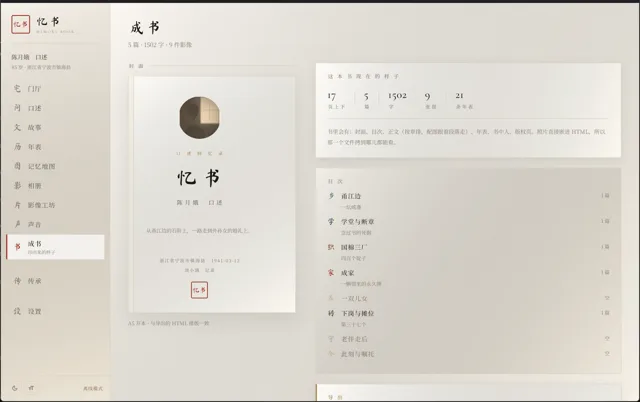
One photograph, place or shared event can open a richer conversation than a request to tell an entire life story. Ask an open question and leave room for the speaker to follow what matters to them. Memory Book connects guided storytelling with the process of organizing and keeping those memories.
Preserve the voice behind the words
A clear written version should still sound like the person whose story it is. Keep distinctive expressions and check details that are uncertain. Invite the speaker or family to review the draft before treating it as final. Their context matters more than making every paragraph sound formally polished.
Build chapters around recognizable themes
Stories can be grouped by place, period, people or recurring interests. Start with a few broad themes and let the material suggest the structure. Connect photographs and captions to the story they help explain. A reader should be able to enter a chapter without needing the entire family history first.
Review the book as an object
Read the pages in order, check names and captions, and look at the balance between images and text. Consider who will receive the book and what context they need. Keep an editable version for corrections and future stories. The project can grow through a series of manageable conversations.