 RoboPioneer
From producer supply to delivery: a cooperative workflow
How agricultural cooperatives can connect available supply, merchant orders and reconciliation.
Keep supply information easy to enter
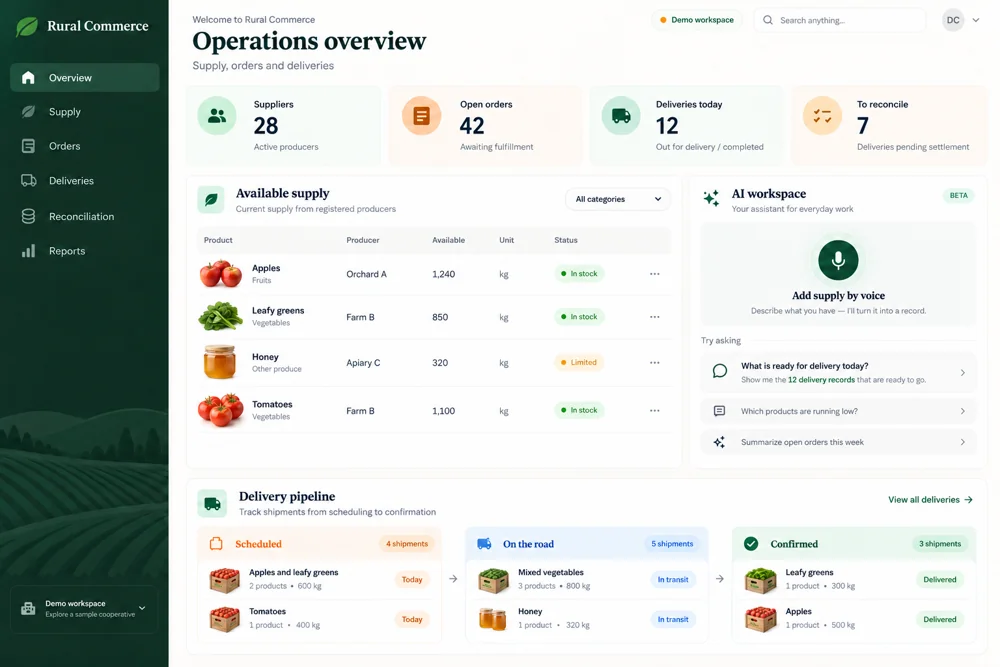
A coordinator needs to know what is available, in which quantity and unit, and for what period. Producers may be entering information between other tasks. Short forms and voice-assisted entry can help make registration more approachable. The resulting record should still be reviewable so units, product names and availability are clear before orders rely on it.
Connect the order to fulfillment
An accepted order creates work for producers, coordinators and delivery teams. Keep the item, quantity, allocation and delivery status connected. A change in available supply should lead to an understandable review step. Rural Commerce is organized around this sequence from producer registration through orders and fulfillment.
Make delivery confirmation useful
A delivery status is most helpful when it belongs to the correct order and can be reviewed by the next person in the process. Decide what evidence is appropriate for the operating model and who confirms exceptions. Avoid asking a driver or coordinator to enter the same delivery information into several disconnected tools.
Close the loop with reconciliation
At closeout, teams need to connect order records, delivery confirmation and settlement information. Design the exception path as carefully as the normal path: partial delivery, revised quantities and unmatched records should be easy to find. A demonstration using one normal order and one exception can reveal more than a dashboard of totals.